21 Dec
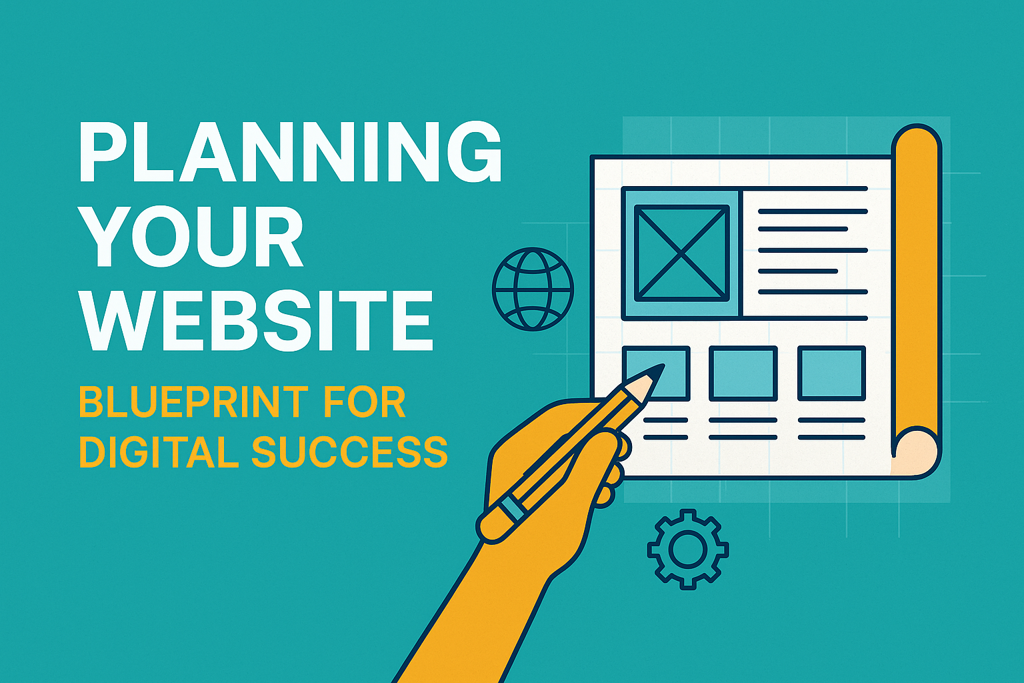
Introduction – Why Website Planning Matters
Before the first line of code or a single design mockup, planning determines the destiny of your website.
A well-planned website isn’t just a collection of pages — it’s a strategic platform that aligns design, content, and technology with your business goals.
Too often, businesses rush to “get online” without defining why they need a website or what they want it to achieve. The result? Unfocused designs, poor conversions, and missed opportunities.
💡 “A website without a plan is like a building without a blueprint.”
In this guide, we’ll help you map out a step-by-step website planning framework — the same method Grow Digitally uses when developing successful business websites for clients in Sri Lanka and beyond.
1. Define the Purpose of Your Website
Every great website starts with a clear purpose. Ask yourself:
- What role should the website play in your business?
- What’s the main outcome you want visitors to take?
Common Website Goals:
| Goal Type | Description | Example |
|---|---|---|
| Informational | Share company details and expertise | A corporate profile site |
| Lead Generation | Collect inquiries or bookings | Service-based business |
| E-commerce | Sell products online | Online fashion or electronics store |
| Educational | Offer learning content | E-learning platform |
| Community | Build user engagement | Forums, blogs, or member areas |
Pro Tip: Avoid trying to do everything on one site. Focus on one primary goal and build supporting features around it.
2. Identify Your Target Audience
Your website should speak directly to your ideal customer — not everyone on the internet.
Define Audience Personas
- Demographics: Age, gender, location, profession
- Psychographics: Interests, motivations, pain points
- Digital Behavior: Where do they hang out online? What devices do they use?
Example Persona:
Name: Nuwan – Small Business Owner in Colombo
Goal: Wants a professional website to attract more clients
Pain Points: Limited time, low technical knowledge
Device: Mobile phone
Decision Triggers: Fast delivery, credibility, good support
With this clarity, you’ll design messaging, visuals, and layouts that connect emotionally and functionally with real users.
3. Research Your Competitors
Analyzing competitors gives you a realistic view of what works (and what doesn’t) in your niche.
How to Do It:
- Google your target keywords – e.g., “interior design company Sri Lanka.”
- Review 5–10 competitor sites
- Note down:
- Their design style
- Navigation structure
- CTAs and conversion points
- Page speed and SEO score
Tools to Use:
- SimilarWeb – Traffic insights
- BuiltWith – Find tech stack
- Ubersuggest / Ahrefs – Keyword strategy
- Lighthouse / GTmetrix – Performance analysis
Then, identify gaps: outdated visuals, missing CTAs, slow pages, or poor SEO — opportunities for your site to outperform them.
4. Define Your Website Structure
A website without structure feels confusing and chaotic.
Your goal is to create a logical navigation flow that guides visitors smoothly.
Common Page Hierarchy:

Home ├── About Us ├── Services ├── Portfolio / Projects ├── Blog ├── ContactKey Principles:
- Keep menus simple (5–7 main items max)
- Use breadcrumbs for easy navigation
- Group similar content logically
- Add a search bar for large websites
📊 Fact: A well-structured website improves engagement time by 40%.
5. Create a Sitemap and Wireframe
Once the structure is ready, visualize it.
A sitemap is the blueprint of all pages and their relationships.
A wireframe is the sketch of each page layout before design.
Tools for Wireframing:
- Figma
- Adobe XD
- Miro
- Canva (for simple mockups)
Wireframes help you decide:
- Placement of hero sections, CTAs, and forms
- Layout of product grids or service cards
- Responsive behavior on mobile/tablet
This stage ensures clarity before creativity — so design decisions are strategic, not random.
6. Plan Your Content Strategically
Great websites are powered by great content.
The Content Foundation:
- Homepage: Your elevator pitch. Who you are, what you do, why you matter.
- About Page: Build trust with your story and mission.
- Services: Detailed explanation of offerings with benefits.
- Blog: SEO driver + thought leadership.
- Contact Page: Simple, accessible forms + Google Maps.
Content Writing Tips:
- Use short, scannable paragraphs
- Focus on benefits, not just features
- Include keywords naturally
- Add trust elements (reviews, logos, numbers)
Pro Tip: Write for the reader first — optimize for Google later.
7. Design Alignment – User Experience (UX) Begins Here
Before designers touch Figma, planning ensures UI/UX goals are clear.
Key UX Planning Steps:
- Define user flow (how a visitor moves through your site)
- Map out CTAs for each page
- Balance visuals and whitespace
- Plan accessibility (color contrast, readable fonts, alt text)
Design is not just about beauty — it’s about experience and emotion.
If users can’t find what they need within seconds, they’ll leave.
8. Choose the Right Technology Stack
Your technology decisions depend on your goals, budget, and scalability.
Common Options:
| Type | Tech / Platform | Ideal For |
|---|---|---|
| CMS | WordPress, Webflow | Blogs, small businesses |
| E-Commerce | WooCommerce, Shopify | Online stores |
| Custom Dev | React, Next.js, Spring Boot | Scalable web apps |
| Hosting | AWS, Hostinger, Namecheap | Secure & fast deployment |
For Sri Lankan businesses, WordPress or custom React + Node.js combinations offer the best balance of flexibility and affordability.
⚡ Tip: Always prioritize speed, security, and scalability over flashy plugins.
9. Budgeting & Timeline
Website planning is also financial planning.
Typical Website Budget (Sri Lanka – 2025)
| Category | Estimated Range (LKR) |
|---|---|
| Basic Business Site | 85,000 – 150,000 |
| E-Commerce | 200,000 – 450,000 |
| Custom Web Application | 400,000 – 1,500,000 |
| Domain & Hosting | 15,000 – 25,000 per year |
| Maintenance | 5,000 – 20,000 per month |
Development Timeline
| Phase | Duration |
|---|---|
| Planning & Wireframes | 1–2 weeks |
| Design | 2–3 weeks |
| Development | 4–8 weeks |
| Testing & Launch | 1 week |
A well-planned project avoids cost overruns and timeline delays.
10. SEO Preparation Before Launch
SEO isn’t something you add later — it begins in the planning phase.
SEO Planning Checklist:
- Keyword research (use Google Keyword Planner or Ahrefs)
- Clean URL structure (/services/web-design-sri-lanka)
- Internal linking strategy
- Optimized titles and meta descriptions
- Mobile-first approach
- Fast, lightweight hosting
Your planning document should already include target keywords and content clusters, so developers can build around them from day one.
11. Compliance, Security & Accessibility
Professional websites must adhere to ethical and technical standards.
Plan For:
- HTTPS / SSL
- Cookie & privacy policy pages
- Contact form spam protection (Google reCAPTCHA)
- ADA accessibility (alt text, keyboard navigation)
- GDPR compliance for international audiences
Security planning prevents data breaches and builds long-term trust.
12. Analytics & Tracking Setup
Plan for success by measuring it.
Before launch, set up:
- Google Analytics 4 (GA4)
- Google Search Console
- Facebook Pixel / Meta Conversion API
- Hotjar or Microsoft Clarity for heatmaps
These tools provide continuous insight into user behavior, so you can refine design and content after launch.
13. The Website Planning Checklist
- Define your website’s purpose
- Identify your target audience
- Research your competitors
- Map your structure & sitemap
- Create wireframes
- Write strong content
- Choose design direction
- Pick the right tech stack
- Set your budget & timeline
- Plan for SEO, analytics & security
14. The Sri Lankan Perspective – Local Insights
Many Sri Lankan businesses underestimate planning — jumping straight to design.
But successful projects (from tourism portals to online retail) always start with strategy.
By planning your website, you’re not just saving time — you’re ensuring every rupee spent has measurable ROI.
15. How Grow Digitally Helps You Plan It Right
At Grow Digitally (Pvt) Ltd, we help businesses plan websites that grow with them.
Our Pre-Development Services:
- Website goal discovery workshop
- Audience & competitor analysis
- Sitemap & wireframe creation
- Keyword & content strategy
- Platform and tech recommendations
- Transparent budget and timeline planning
This ensures your site is built on strategy, not guesswork.
Conclusion – Plan Before You Build
A beautiful website means nothing if it doesn’t deliver results.
Planning is what transforms an idea into a scalable digital asset.
It defines who you’re targeting, how you’ll reach them, and what success looks like.
“If you fail to plan, you plan to fail. But if you plan to build — you build to grow.”
Start your web project with intention, and you’ll save time, money, and frustration — while launching a website that’s built for true digital success.
📞 Call to Action
🚀 Ready to Plan Your Website with Confidence?
Our expert team at Grow Digitally will help you create a clear roadmap — from idea to implementation.
📧 Email: hello@growdigitally.lk
🌐 Visit: www.growdigitally.lk
📱 WhatsApp: +94 74 029 0962
Let’s turn your vision into a digital growth strategy that works.
📅 Coming Next in the Series
➡️ Part 3: “Website Design (UI/UX) – The Art of First Impressions.”
Learn how great design transforms user experience, boosts conversions, and shapes how people perceive your brand online.