08 Aug
How to Register a Business in Sri Lanka (2025)
The dream of starting your own business is incredibly exciting, but turning that dream into a reality requires navigating some essential legal and administrative steps. For aspiring entrepreneurs in Sri Lanka, understanding the business registration process is the crucial first step towards building a legitimate and thriving enterprise. This comprehensive guide will walk you through everything you need to know about how to register a business in Sri Lanka in 2025, covering the different business types, the step-by-step process, common pitfalls to avoid, and answers to frequently asked questions. Whether you’re a sole proprietor or planning a limited company, we’ll help you lay a solid foundation for your venture.
Types of Business Registration in Sri Lanka
Choosing the right legal structure for your business is a foundational decision that impacts everything from liability and taxation to administrative burden and future growth potential. In Sri Lanka, new businesses typically opt for one of the following common structures:
1. Sole Proprietorship
The simplest and most straightforward business structure, a sole proprietorship is owned and operated by a single individual.
- Key Characteristics:
- Unlimited Liability: There is no legal distinction between the owner and the business, meaning your personal assets are not protected from business debts or legal obligations.
- Ease of Setup: Generally the easiest and least expensive to establish.
- Taxation: Business income is taxed as the owner’s personal income.
- Registration Authority: Divisional Secretariat.
2. Partnership
A partnership is formed by two to twenty individuals who agree to share in the profits or losses of a business.
- Key Characteristics:
- Shared Liability: Partners typically share legal and financial liability, which can be unlimited unless it’s a Limited Liability Partnership (less common for small, new setups).
- Formal Agreement: Governed by a partnership agreement, usually drafted by a lawyer, outlining roles, responsibilities, profit-sharing, and dissolution terms.
- Capital: Easier to raise capital than a sole proprietorship due to multiple contributors.
3. Private Limited Company (Pvt Ltd)
This is a popular choice for businesses planning to scale or those requiring a separate legal identity from their owners.
- Key Characteristics:
- Limited Liability: Shareholders’ liability is limited to the amount of capital they have invested in the company, protecting personal assets.
- Separate Legal Entity: The company has its own legal existence, separate from its owners.
- Minimum Requirements: Requires a minimum of one shareholder and one director (who can be the same person) and a company secretary.
- Public Share Offering: Cannot offer its shares to the general public.
- Compliance: Subject to stricter regulatory compliance, including mandatory annual returns and financial audits.
- Registration Authority: Department of the Registrar of Companies (DRC) via the eROC system.
4. Public Limited Company (PLC)
Typically chosen by larger enterprises that intend to raise capital from the public by offering shares on a stock exchange.
- Key Characteristics:
- Public Share Offering: Can offer shares to the public.
- High Regulation: Subject to extensive regulatory requirements and scrutiny by the Securities and Exchange Commission of Sri Lanka.
5. Company Limited by Guarantee
This structure is commonly used for non-profit organizations, charities, professional bodies, or clubs, where members act as guarantors rather than shareholders.
- Key Characteristics:
- No Share Capital: Does not have share capital.
- Specific Purpose: Formed for non-commercial objectives.
Step-by-Step Process of Registration
Navigating the registration process can seem daunting, but breaking it down into manageable steps makes it much clearer. Here’s a general guide to registering your business in Sri Lanka in 2025:
1. Step 1 – Choose Your Business Type
Before anything else, decide which of the business types (Sole Proprietorship, Partnership, Private Limited Company, etc.) best fits your vision. Consider:
- Liability: How much personal risk are you willing to take?
- Number of Owners: Are you going solo, or with partners?
- Capital Needs: How do you plan to fund your business now and in the future?
- Complexity: Are you comfortable with more administrative and compliance requirements for greater legal protection?
2. Step 2 – Register Your Business Name
Once you’ve decided on your structure, securing your business name is paramount.
- For Companies (e.g., Private Limited Company):
- Authority: Department of the Registrar of Companies (DRC).
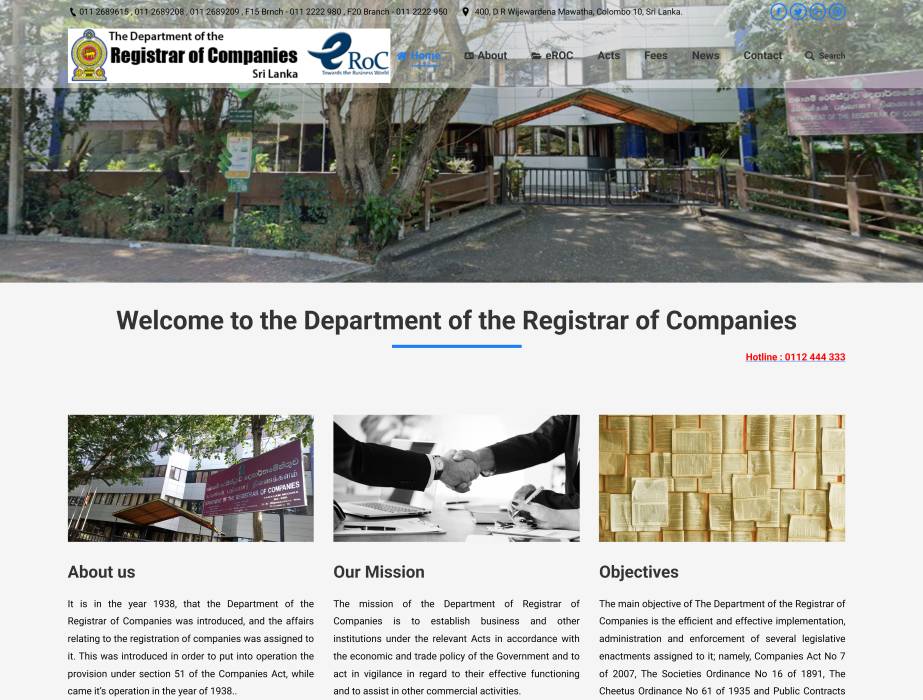
- Process: Access the e-Registrar of Companies (eROC) portal on the DRC website. Here, you can perform a name availability check to ensure your desired name hasn’t already been taken. If available, you can reserve it online. This reservation is usually valid for three months, giving you time to complete the rest of your registration. While name approval prevents identical registrations, remember to consider trademark registration if you want exclusive brand rights.
- For Sole Proprietorships:
- Authority: Your local Divisional Secretariat.
- Process: You’ll typically apply for name registration directly at the Divisional Secretariat.
3. Step 3 – Prepare and Submit Documents
This is where the paperwork comes in. The required documents vary significantly based on your chosen business type.
- For Private Limited Companies (Online via eROC):
- Form 1 (Application of Incorporation): This is the main application form for company registration.
- Form 18 (Consent and Certificate of Director): Each director must sign this form, consenting to act as a director.
- Form 19 (Consent and Certificate of Secretary/Secretaries): The company secretary (or secretaries) must sign this form.
- Articles of Association (AoA): This crucial document outlines the company’s internal rules and regulations. You can opt for the standard Table A from the Companies Act No. 07 of 2007 or have a custom-drafted one. If your company involves foreign shareholding, it’s vital that the company name appears in English, Sinhala, and Tamil on the first page of the AoA.
- Submission: For online registration, these forms are typically generated by the eROC system. You will download, fill out, obtain necessary signatures, scan, and then upload the completed documents back to the portal.
- For Sole Proprietorships (In-Person):
- An application form obtained directly from your Divisional Secretariat.
- A letter from your Grama Niladhari (village officer) confirming your business address.
- An affidavit declaring your initial investment in the business.
- Submission: These documents are submitted in person at your local Divisional Secretariat.
4. Apply Online or In-Person
Sri Lanka offers both online and traditional in-person avenues for business registration, each with its own advantages.
- Online Application: The eROC (e-Registrar of Companies) portal is the primary digital gateway for registering Private Limited Companies. It’s designed to streamline the entire process, allowing you to complete everything from name reservation to final certificate issuance without needing to visit physical offices. Payments for online applications are conveniently made via debit or credit card. This method offers speed and efficiency.
- In-Person Application: For Sole Proprietorships, applications are primarily handled in-person at the relevant Divisional Secretariat. For company registrations, while eROC is preferred, in-person submission to the Department of the Registrar of Companies is also an option if you prefer direct interaction or require specific assistance.
5. Get Licenses (Special Businesses)
Beyond the general business registration, many specific types of businesses are legally required to obtain additional licenses and permits before commencing operations. These requirements are highly sector-specific and are issued by various governmental or local authorities. It’s crucial to identify these early to avoid legal complications and operational delays.
- Examples of businesses requiring special licenses:
- Food Services: Restaurants, cafes, and food processing units typically need health permits from local municipal councils (e.g., Colombo Municipal Council).
- Travel Agencies: Require specific licenses from relevant tourism authorities, and often come with a substantial minimum share capital requirement (e.g., LKR 5,000,000 for certain types of operations).
- Financial Services: Any business involved in banking, finance, or money lending is regulated by the Central Bank of Sri Lanka and requires their specific approvals.
- Liquor Sales: Businesses selling alcoholic beverages need various types of licenses from the Excise Department of Sri Lanka (e.g., FL 4 for retail, FL 7/8 for hotels/restaurants).
- Gem Dealers: Requires a specific license from the National Gem and Jewellery Authority.
- Tea Exporters: Must register with and obtain licenses from the Sri Lanka Tea Board.
- Manufacturing/Factories: Industrial operations often require a Trade License from the local authority (Municipal Council or Pradeshiya Sabha) and an Environmental Protection License (EPL) from the Central Environmental Authority.
- Waste Management: Businesses involved in generating, collecting, transporting, storing, or treating waste may require a Scheduled Waste Management License.
- Issuing Authorities: These licenses are highly specific to the industry and can be issued by ministries, local governmental bodies (like Municipal Councils), specialized boards (e.g., Export Development Board, Sri Lanka Tea Board), or specific government departments (e.g., Excise Department).
Common Mistakes to Avoid
Starting a new business is exhilarating, but overlooking key details during registration can lead to headaches down the line. Here are some common pitfalls new entrepreneurs in Sri Lanka should actively avoid:
- Choosing the Wrong Business Structure: This is arguably the most significant mistake. Opting for a Sole Proprietorship when a Private Limited Company would better suit your growth plans or liability concerns can create unnecessary legal and financial risks later. Understand the implications of unlimited vs. limited liability, tax structures, and administrative burden before deciding.
- Ignoring Local Regulations and Ongoing Compliance: Registration isn’t a one-time event. Many entrepreneurs overlook ongoing compliance requirements like annual returns, financial reporting, and specific industry regulations (e.g., Anti-Money Laundering laws). Neglecting these can lead to fines, legal complications, or even business closure.
- Submitting Incorrect or Incomplete Documentation: This is a major cause of delays. Ensure all forms are filled accurately, all required supporting documents (NIC copies, address proof, etc.) are attached, and they comply with the specific standards of the registering authority. Double-check everything before submission.
- Not Securing Exclusive Rights to Your Business Name: While the Registrar of Companies prevents identical names, a similar-sounding name might still be registered by another entity if it’s in a different business category. If your brand name is crucial to your identity, consider pursuing trademark registration with the National Intellectual Property Office for exclusive rights across all sectors.
- Inadequate Financial Planning: Many new businesses underestimate the total costs involved beyond just the registration fees. Factor in legal consultation fees, initial capital requirements (especially if there’s a minimum share capital for your chosen industry), ongoing compliance costs, and potential licensing fees.
- Underestimating Bank Account Opening Complexities: Opening a corporate bank account in Sri Lanka can be a lengthy process, often requiring extensive documentation and physical verification, especially for companies with foreign directors or shareholders. Prepare for this early.
- Not Understanding Industry-Specific License Requirements: As detailed earlier, many sectors require additional licenses. A common mistake is to start operations without securing these, leading to penalties or forced shutdowns. Be aware that some licenses might also demand a specific minimum share capital for your company to qualify (e.g., for travel agencies).
- Neglecting Post-Registration Tax and Employee Obligations: After registration, your business automatically incurs tax obligations (e.g., VAT, income tax) and, if you hire staff, obligations like EPF and ETF contributions. Failing to register for these or make timely payments can result in significant penalties. Ensure you establish proper accounting records from day one.
How GrowDigitally Simplifies Business Registration for You
Navigating the complexities of business registration in Sri Lanka can be time-consuming and daunting, especially when you’re focused on launching your new venture. This is where GrowDigitally.lk steps in to streamline the entire process for you. As a dedicated digital growth company, we understand the intricacies of local regulations and are committed to making your business registration in Sri Lanka as smooth and hassle-free as possible.
We offer comprehensive business registration services designed to empower new business owners. All you need to do is provide us with the relevant documents, and we handle the rest – from meticulously conducting your name registration and ensuring its approval with the Department of the Registrar of Companies, to preparing and submitting all necessary forms (like Form 1, Form 18, Form 19, and the Articles of Association for companies).
Our goal is to take the burden of paperwork and bureaucratic procedures off your shoulders, allowing you to focus on what truly matters: building and growing your business. We also provide post-incorporation support, including secretarial services, EPF/ETF registration, bank resolutions, and accounting guidance, ensuring your business remains compliant from day one.
To get started, simply visit our website at https://growdigitally.lk/business-registration/
Explore our pricing plans and find one that perfectly suits your needs. Alternatively, you can contact us directly to discuss how we can assist you in establishing your business confidently in Sri Lanka.
FAQs
Here are answers to some frequently asked questions by new business owners in Sri Lanka:
- How long does business registration take in Sri Lanka?
- The timeline varies by business type and accuracy of submissions. For online Private Limited Company registration via the eROC portal, the process is streamlined. Name reservation is typically valid for three months, and if all documents are correctly submitted, the entire process can often be completed within a few weeks to a month. Sole proprietorship registration at Divisional Secretariats can sometimes be faster, but it depends on the specific secretariat’s processing times.
- What are the primary costs involved in registering a business?
- Costs depend on the business type. For a Private Limited Company registered online via eROC in 2025, approximate total costs (including VAT) for basic registration forms and name reservation would be around LKR 25,000. This includes fees for name reservation, Form 1, Form 18, Form 19, and Articles of Association.
- Sole Proprietorship registration fees at the Divisional Secretariat are generally lower, often a few thousand LKR.
- Remember, these are just registration fees. You’ll also need to budget for legal consultation (if used), stamp duties, specific license fees, and potential minimum share capital requirements for certain industries.
- Do I need to hire a lawyer or a company secretary?
- For Private Limited Companies, having a company secretary is a legal requirement. While you can handle some aspects yourself via eROC, it’s highly advisable to engage a professional (a lawyer or a corporate secretarial firm) to draft your Articles of Association and ensure full compliance, especially if your company structure is complex or involves foreign investment.
- For Partnerships, a lawyer is strongly recommended to draft a comprehensive partnership agreement to avoid future disputes.
- For Sole Proprietorships, a lawyer is not typically required for basic registration, but legal advice can be helpful for specific contracts or business agreements.
- What about EPF/ETF registration for employees?
- If you plan to hire even one employee, registration with the Employees’ Provident Fund (EPF) and Employees’ Trust Fund (ETF) is mandatory. You must register your business with the Department of Labour by submitting “FORM-D” in duplicate, certified, and forwarded to the nearest district labour office within 14 days of recruiting your first employee. EPF registration automatically covers ETF. Be aware that significant penalties can be imposed for delayed or non-contributions, ranging from 5% (for delays of 1-10 days) up to 50% (for delays over 12 months). Employers are also required to submit the employee’s record card ‘Form A’ to the relevant labour office within 30 days of recruitment, and for first-time employees, facilitate their appearance before the Commissioner General of Labour or an authorized officer for Form A submission.
- Do I need to register for VAT?
- Yes, after your business is officially registered, you will need to separately register for Value Added Tax (VAT) with the Department of Inland Revenue. This is a distinct process from business registration and currently costs around LKR 1,500 + 8% VAT. As per the VAT (Amendment) Act No. 04 of 2025, it is mandatory for every person engaged in the import or export of goods for commercial purposes to register for VAT, regardless of turnover thresholds or exemptions. Furthermore, all VAT-registered persons are required to furnish their VAT returns by electronic means from July 1, 2025.